Switchgear & Protection
- Featured
- Most relevant
- Best selling
- Alphabetically, A-Z
- Alphabetically, Z-A
- Price, low to high
- Price, high to low
- Date, old to new
- Date, new to old
- Featured
- Most relevant
- Best selling
- Alphabetically, A-Z
- Alphabetically, Z-A
- Price, low to high
- Price, high to low
- Date, old to new
- Date, new to old
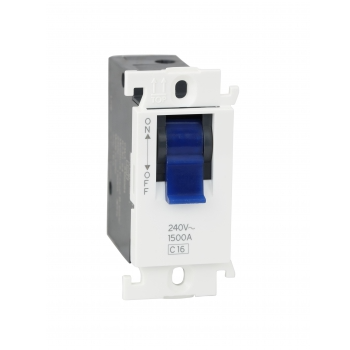
Legrand Mylinc 32A MODULAR MCB SP 1Module White - 675642
Lauritz Knudsen M-POWER+ Module for Mobile Starter – 1P/3P, 3-Wire – Multi-Language IVRS – HSN 8538 – Cat. No. GSM0301OONO
Legrand Lyncus 32A SP MCB 1Module White - 677283
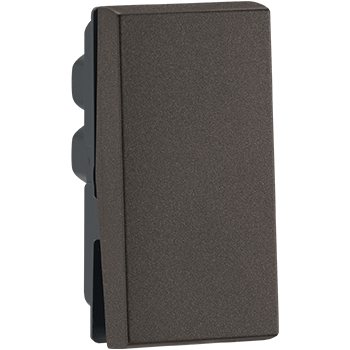
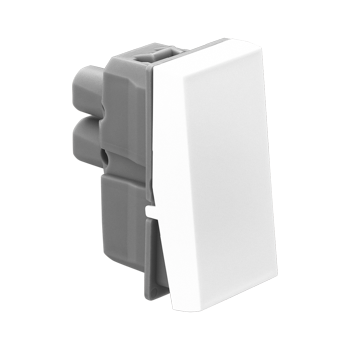
Legrand Myrius NEXTGEN 6A SWITCH 1Way 1Module Charcoal Grey - 679400
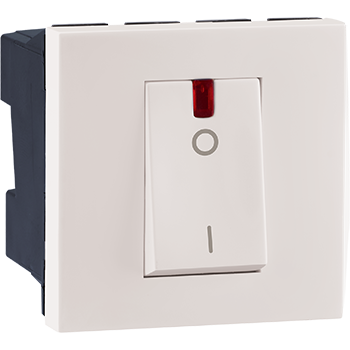
Legrand Myrius NEXTGEN 32A DP SWITCH with Indicator 2Module White - 679217
Legrand Myrius NEXTGEN 16A SWITCH 1Way 1Module Charcoal Grey - 679409
Legrand DX³ RCBO Double Pole 240V AC Type 30mA 6A 411322
Legrand Myrius NEXTGEN 6A SWITCH 2Way 1Module Charcoal Grey - 679401
Legrand Mylinc BLANKING PLATE 1Module - 675590
Legrand Allzy MCB SP C Curve Matt Black 25A 240V 1Module - 681260
Legrand Allzy Blanking Plate 1Module White - 681169
Legrand Myrius NEXTGEN 16A SWITCH with Indicator 1Way 1Module White - 679211
Switchgear and Protection for Homes, Offices and Industry
Every circuit in a building needs a device that switches it off when something goes wrong. This page explains which protection device does what, how to size a distribution board, and when to add surge protection, so you can buy the right combination for your home, office or plant.
What Does Switchgear and Protection Do?
Switchgear and protection devices switch, isolate and protect electrical circuits. They cut power automatically during an overload, short circuit, earth leakage or voltage surge, protecting wiring and appliances from damage and people from electric shock.
Which Protection Device Do You Need?
| Device | Protects against | Typical use |
|---|---|---|
| MCB (Miniature Circuit Breaker) | Overload and short circuit | Individual circuits in homes and offices |
| RCCB / ELCB | Earth leakage (shock and fire risk) | Main protection for groups of circuits |
| RCBO | Overload, short circuit and earth leakage in one device | Wet areas, critical circuits, single-circuit protection |
| MCCB (Moulded Case Circuit Breaker) | Overload and short circuit at higher currents | Main incomers, commercial and industrial panels |
| ACB (Air Circuit Breaker) | Overload and short circuit at very high currents | Main LT panels in large buildings and plants |
| Isolator | Safe manual disconnection (no automatic tripping) | Main switch, maintenance isolation |
| Changeover switch | Switching between mains and generator / inverter | Homes, shops and offices with backup power |
| SPD (Surge Protection Device) | Voltage surges from lightning or switching | Main DB, solar systems, sensitive electronics |
| Fuse & fuse holder | Short circuit (one-time operation) | Equipment and panel-level protection |
| Distribution board (DB) | Houses and connects all the above | Every building |
MCB vs RCCB vs RCBO: What Is the Difference?
An MCB protects wiring from overload and short circuits, an RCCB protects people from earth-leakage shocks, and an RCBO does both in a single device. An MCB cannot detect leakage, and an RCCB cannot detect overload, so a safe home uses both, or RCBOs.
| Feature | MCB | RCCB | RCBO |
|---|---|---|---|
| Overload protection | Yes | No | Yes |
| Short-circuit protection | Yes | No | Yes |
| Earth-leakage / shock protection | No | Yes | Yes |
| Typical rating | 6 A – 63 A | 25 A – 100 A; 30 mA / 100 mA / 300 mA | 6 A – 32 A; 30 mA |
| Where it sits | Each outgoing circuit | After the main switch, before MCBs | On individual circuits |
RCCB sensitivity: 30 mA is the common choice for protecting people from shock in homes. 100 mA and 300 mA ratings are used for equipment and fire protection. Wet areas such as bathrooms, kitchens and utility spaces benefit most: if you plan to buy a washing machine online, make sure its socket circuit sits behind a 30 mA RCCB or RCBO.
How to Choose an MCB Distribution Board
An MCB distribution board is the enclosure that holds your main switch, RCCB and MCBs. Choose it in this order:
- Pick the phase: SPN (single-phase) boards for most homes; TPN (three-phase) boards for larger homes, shops and commercial supplies.
- Count your circuits: list every lighting, socket, AC and appliance circuit, and add the incomer and RCCB modules.
- Add 20–30% spare ways for future circuits such as an extra AC, EV charger or solar connection.
- Choose the type: flush-mounted for concealed wiring, surface-mounted for existing walls; metal or insulated enclosures based on site conditions.
- Match the series: use MCBs and RCCBs from a series designed for the board so busbars and covers fit correctly.
- Check the DB accessories: busbars, neutral links, earth bars and blanking plates for unused slots.
MCB Curves: B, C or D?
The curve decides how quickly an MCB trips when a load draws a short burst of high starting current.
| Curve | Trips at (approx.) | Best for |
|---|---|---|
| B | 3–5 × rated current | Lighting and resistive loads (heaters, geysers) |
| C | 5–10 × rated current | General homes and offices: sockets, ACs, small motors |
| D | 10–20 × rated current | High-inrush loads: motors, pumps, transformers, welding |
Motor loads such as an industrial exhaust fan or other pumps and motors often need C or D-curve MCBs. For larger motors, pair the breaker with starters and other automation and control products.
Breaking Capacity (kA)
Breaking capacity is the maximum fault current an MCB can safely interrupt. It is printed on the front of the device (for example, "6000" means 6 kA).
- 6 kA: commonly used in homes and small offices.
- 10 kA and above: commercial buildings, industrial sites and installations close to a transformer.
Does Your Home Need a Surge Protection Device?
A surge protection device for home diverts sudden voltage spikes to earth before they reach your appliances. MCBs and RCCBs do not protect against surges, so an SPD is the only device in the DB that does this job.
Your home is a strong candidate for an SPD if:
- You live in a lightning-prone area or a top-floor / independent house.
- Your power supply has frequent fluctuations or switching surges.
- You own expensive electronics: TVs, computers, inverter ACs, home automation.
- You have rooftop solar. If you are comparing solar panels in India, plan SPDs on both the DC and AC sides of the system.
Important: an SPD works only with good earthing. Get the earth resistance checked when you install one.
SPD Types Explained
| Type | Installed at | Protects against |
|---|---|---|
| Type 1 | Main incomer of buildings with external lightning protection | Direct lightning current |
| Type 2 | Main or sub distribution board | Indirect lightning and switching surges (most common for homes) |
| Type 3 | Close to sensitive equipment | Residual surges; used together with Type 2 |
Example: A Fully Protected Home Circuit
A typical single-phase home distribution board is arranged like this. Final ratings depend on connected load and must be designed by a licensed electrician.
| Position | Device | Purpose |
|---|---|---|
| 1. Incomer | Main isolator or double-pole MCB | Switches off the whole house |
| 2. Earth-leakage | 30 mA RCCB (or RCBOs per circuit) | Shock and leakage protection |
| 3. Surge | Type 2 SPD | Protects appliances from voltage spikes |
| 4. Lighting & fans | 6 A – 10 A MCBs | Lighting circuits |
| 5. Sockets | 16 A MCBs | General socket circuits |
| 6. Heavy loads | 16 A – 32 A MCBs (C-curve) | AC, geyser, kitchen appliances |
Match each MCB to the wire it protects, not just to the appliance. A lighting circuit feeding decorative LED lights for home runs on thin wire and needs a small MCB, while a hot and cool air conditioner needs its own higher-rated circuit. Our guide to the best wire for house wiring shows which wire size suits each MCB rating, and the socket ratings to use for sockets and switches on each circuit.
Common Switchgear Mistakes to Avoid
- Oversized MCBs: a breaker rated higher than the wire lets the wire overheat before it trips.
- Skipping the RCCB: MCBs alone do not protect against electric shock.
- No spare ways: a full DB forces unsafe add-ons later.
- Wrong curve for motors: B-curve MCBs on pumps and motors cause nuisance tripping.
- SPD without proper earthing: the device cannot divert surges.
- Loose, unrouted wiring into the DB: route cables neatly through PVC cable trunking so terminals stay accessible and safe.
Shop Switchgear and Protection at MGCKART
MGCKART, by MK SR Electricals and Instrumentation Pvt Ltd, lists switchgear and protection from Legrand, Havells and Lauritz Knudsen (L&T Switchgear), alongside all electrical items your project needs. Browse by product type:
- MCBs, MCCBs and ACBs
- RCCBs / ELCBs and RCBOs
- Isolators and changeover switches
- Surge protection devices
- Fuses and fuse holders
- Distribution boards and DB accessories
Filter by brand, current rating, poles and curve to find the exact device for each circuit.
Frequently Asked Questions
What is switchgear and protection?
Switchgear and protection devices, such as MCBs, RCCBs, isolators and SPDs, switch, isolate and protect electrical circuits by cutting power during overloads, short circuits, earth leakage or voltage surges.
Is an RCCB necessary if I have MCBs?
Yes. MCBs protect wiring from overload and short circuits, but only an RCCB or RCBO protects people from earth-leakage shocks.
Which RCCB rating is best for home use?
A 30 mA RCCB is commonly used in homes for protection against electric shock.
How many ways should my MCB distribution board have?
Count all your circuits plus the incomer and RCCB modules, then add 20–30% spare ways for future needs.
Which MCB is used for an AC?
A C-curve MCB, commonly 16 A to 32 A depending on the AC’s rating and the wire size of its circuit.
Where is a surge protection device installed?
A Type 2 SPD is installed in the main distribution board, connected to a properly tested earth.